
- Published
US interest rates have been raised for the first time in more than three years and could be increased further in a bid to slow rising prices.
Rates were hiked to 3.75%-4% from 3.5%-3.75% by the Federal Reserve in a unanimous decision on Wednesday despite fierce opposition from President Donald Trump, who had called for rates to be cut.
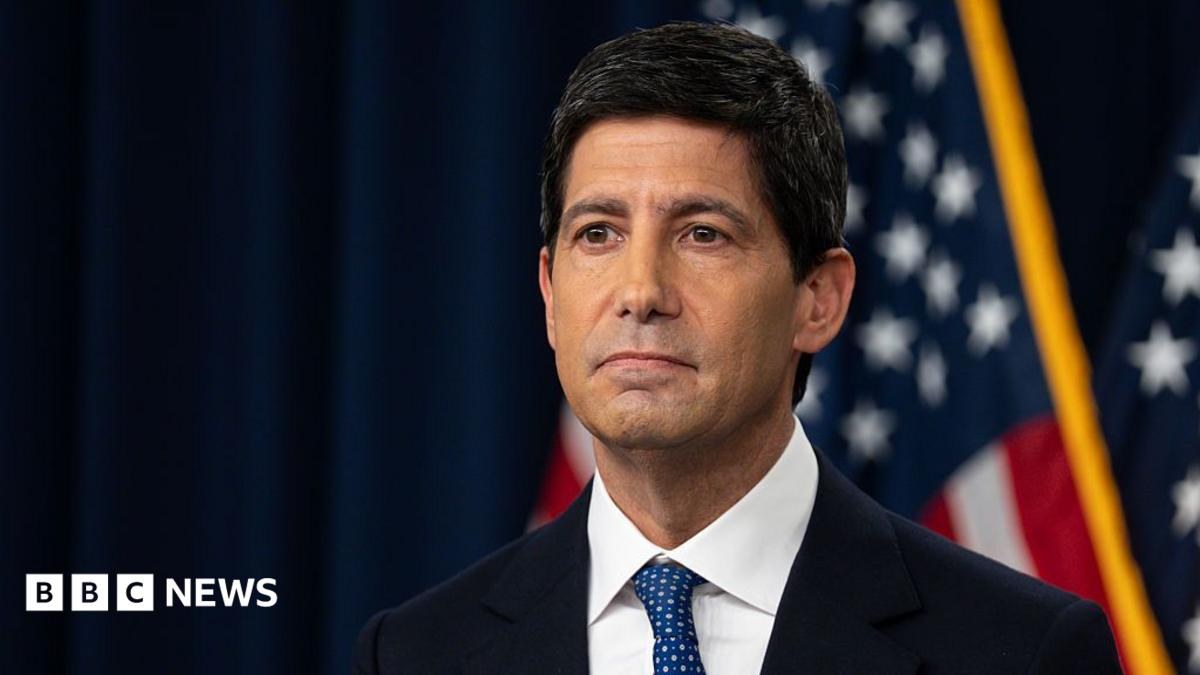
Fed Chair Kevin Warsh said the move was because "inflation is too high and has been for too long", adding that it was a "sober" and "responsible decision".
However, Trump said rates "should be 1%, or less, because we are the Best Credit in the World - BY FAR".
Higher interest rates make borrowing more expensive for people wanting to secure loans, mortgages and credit cards, but can lead to better returns on savings.
Warsh said while there was "an attitude of optimism" within the Federal Reserve leadership, inflation remained a problem.
"For more than five years, inflation has been running above target," he said. "The plain fact is that inflation is too high and has been for too long."
Ahead of the mid-term elections in November, affordability is one of the top concerns of American voters, who have seen diesel prices hit an all-time high and petrol rise above $4 (£2.99) a gallon on average.
Global oil prices have surged since the start of the US-Israel war with Iran, driving up the price of car fuel as well as the cost of goods and services generally.
The price of oil is also key in to the costs businesses face in transporting goods across the country and around the world to sell. The higher costs can result in companies increasing prices, hitting the pockets of households.
Warsh told a press conference following the decision to raise interest rates that the Fed "cannot effect any individual price whether it be oil prices, whether it be food stuffs at the grocery store", but could ensure price rises do not broaden across the economy.
He added that strong jobs market and wider economy meant the Fed was focused on stablising prices, adding that those least well off had most to gain from lower inflation.
Central banks tend to increase rates when inflation is high to discourage spending and encourage saving in the hope this will reduce the pace of price rises.
But it's a balancing act, as higher rates can also encourage businesses to hold off on investing and hurt economic growth.
Disagreement with the White House
Asked about the message the decision sent to Trump, Warsh chuckled before saying "I have got nothing for you on a discussion with the president," as he batted away similar questions with the same response.
The Federal Reserve is independent of the government, but has faced sharp criticism from Trump over its decisions on rates in recent years.
Trump was heavily critical of Warsh's predecessor Jerome Powell, who stepped down at the end of his term earlier this year, for not cutting rates.
Following Wednesday's announcement, Trump said rates should be cut to "1%, or less".
"LOWER THE INTEREST RATES FOR THE UNITED STATES OF AMERICA, AND FAST!", he posted on social media.
Earlier a White House press secretary Kush Desai told Fox News the president and White House had "reiterated our commitment to the independence of the Federal Reserve on numerous occasions" but added it did not prevent Trump being able to voice his opinions.
Warsh said at the press conference that "part of the independence of the Federal Reserve is we stay in our lane".
This hike by the Fed is the first move rate move in any direction since they were cut in December 2025. The last time they were raised was in July 2023.
A 0.25pp increase will likely add to increasing mortgage rates for homebuyers, as the rates set by banks and other lenders are heavily influenced by the Fed's policy rate.
Major US banks JP Morgan, KeyCorp and BNY raised their prime lending rate on Wednesday to 7% from 6.75% in response, which will rates charged on credit cards and personal loans.
Mortgage costs have climbed over the past year but remain below peaks seen in 2023. A 30-year fixed deal is 6.76% on average, while a 15-year deal is 6.09%, according to figures from Freddie Mac.
Due to many US homeowners having 30-year and 15-year fixed-rate mortgages, changes to interest rates will not impact monthly repayments, though they could affect those looking to secure a loan for a home or refinance.
Warsh declined to provide his own view on where he saw interest rates going into the future, but the majority of his fellow policymakers said they believe rates would be hiked again before the end of this year to between 4-4.25%.
A small majority said rates could rise further to the 4.25-4.5% next year, before cuts begin in 2028 and 2029.
The forecast suggested price rises will ease in the coming years, with inflation, the measure used to assess the cost of living, predicted to fall steadily to the Fed's 2% target by 2029.
The US is not alone in tackling the inflation impact from the conflict in the Middle East, with the European Central Bank raising rates last week and the Bank of England set to make its own decision on Thursday.
Related topics
-
- Published1 day ago
-
- Published5 days ago