
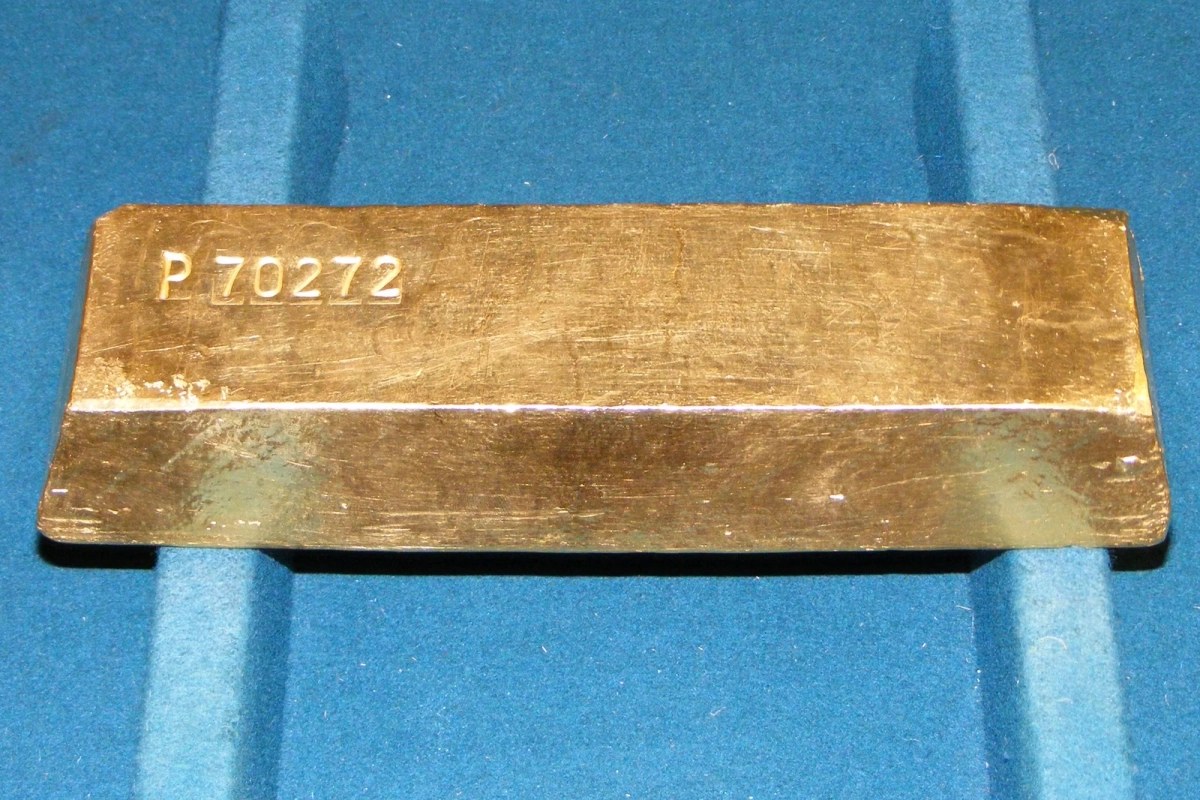
International gold prices have plummeted this year. After setting an all-time high at the start of the year, spot gold has fallen steadily, with cumulative losses exceeding 30% and prices dropping to their lowest level since late 2025. Joni Teves, precious metals strategist in UBS Investment Bank's Global Economics and Strategy Research division, acknowledged in a latest report that third-quarter performance was notably weak and the near-term outlook must turn more cautious, cutting the end-2026 gold price target to $4,500 per ounce (about NT$150,000), while keeping the end-2027 forecast of $5,000 (about NT$160,000) unchanged.
The turning point in this correction came in January. Spot gold began rising from around $4,318, hitting an intraday record peak of $5,598.75 on January 29, setting more than a dozen all-time highs in a single month with gains approaching 30%. But the rally reversed in May, closing at $4,007.49 on June 30—turning negative for the first half with a cumulative decline of 7.2%—and officially losing the $4,000 threshold on July 1. Although prices rebounded to the $4,400–$4,500 range in July and August, gold weakened again after the Federal Reserve resumed rate hikes in September with a 25-basis-point increase, closing at $3,875 on October 30—wiping out all of this year's gains.
The decline continued into November. Gold first broke below the key $3,800 support, then plunged through $3,700 intraday on November 19 to a new low since September 2025, before recovering slightly to around $3,733.
Teves attributed gold's weakness to three structural pressures. First, Federal Reserve policy expectations have shifted sharply, with the continued hiking cycle pushing U.S. Treasury yields higher, and elevated real interest rates diminishing the appeal of non-yielding gold. Second, the dollar has strengthened, with the US Dollar Index (DXY) climbing to its highest since early 2025, directly suppressing dollar-denominated precious metals. Third, there is a capital crowding-out effect: artificial intelligence (AI) and energy themes have become the market's capital magnets, and investors, fearful of missing the tech-stock rally, have pulled money out of gold allocations.
The rise in rate-hike expectations has clear policy signals. Federal Reserve Governor Christopher Waller said a 50-basis-point hike may be needed in December to deal with more stubborn and spreading inflation, to "give people a bit of a shock." The meeting minutes released on November 18 showed that nearly all participants believed further hikes would likely be appropriate, with two suggesting that if inflation data disappoints, there would be reason for a hike of more than 25 basis points in December.
Market pricing has shifted from "whether to hike in December" to a "rate-hike series." Zhao Xiangbin, a researcher at the Beijing Gold Economic Development Research Center, analyzed that the market currently sees a 68.1% probability of cumulative 50 basis points of hikes before January next year—essentially pricing in a tightening cycle extending into the first half of next year. Rate-hike expectations have simultaneously pushed the dollar index toward 104, a 19-month high, while 10-year U.S. Treasury yields hold firmly above 5%, creating the most direct valuation pressure on zero-yield gold.
Major institutions have diverged on the outlook. Goldman Sachs cut its gold price forecasts, lowering its end-2026 target from $4,650 to $4,150 and its end-2027 target from $5,400 to $4,800. UBS remains bullish on gold's medium- to long-term allocation value and particularly favors long opportunities in euro-denominated gold.
Short-Term Liquidation, Not a Fundamental Reversal
UBS interprets the recent sharp decline as typical short-term position liquidation rather than a change in structural market logic. Teves noted that investors are reducing overall positions in U.S. equities, especially tech stocks, which has dragged gold lower; cross-asset volatility has intensified after the U.S. midterm elections, and with markets reassessing the Federal Reserve's policy path, some institutions have also sold gold to raise liquidity.
Notably, positioning data has shifted. As of November 10, gold prices and net speculative positions combined had increased by more than 1 million ounces, against a backdrop of falling yields, market concerns about tighter AI regulation, and declining oil prices after the U.S. election results were announced.
More critically, overall gold ETF holdings remain resilient. Teves believes that while strategic and long-term investors have paused adding to positions, there are absolutely no signs of panic selling, and UBS expects over-the-counter investor holdings to remain similarly stable.
The factors supporting gold in the long term have not disappeared. Government debt and fiscal deficit problems remain unresolved across countries, and markets remain wary of whether AI industry profits can materialize, whether bond yields will spike excessively, and even central bank policy missteps. Teves emphasized that if any single risk triggers a recession, real yields could reverse sharply downward—and market confidence in the baseline scenario has fallen to historic lows, an uncertainty that lies at the core of gold's appeal.
No Rush in the Near Term; Watch Two Signals
Asked whether it is time to bottom-fish, most experts surveyed leaned conservative. Wang Hongying, director of the China (Hong Kong) Financial Derivatives Investment Research Institute, said structural factors weighing on gold remain, with short-term bears dominating the market. Although some central banks continue to increase holdings, it is still difficult to form major bullish support in the near term. This is not an appropriate time to bottom-fish; a wait-and-see approach is recommended, with modest allocations to non-leveraged gold ETFs possible at key support levels such as $3,600—but leverage should be avoided.
Zhao Xiangbin also believes it is too early to enter. He noted that gold has broken below $3,700, with psychological support at $3,600; bottom-fishing at $3,700 amounts to "catching a falling knife" rather than scooping up a "golden pit." The technical support range is tentatively seen at $3,600–$3,700, but from mid-December it must be tested whether this range can withstand the rate-hike pressure from December and January. He advises investors to watch two signals closely: 10-year U.S. Treasury yields falling back and the dollar index weakening from around 104. Only when both appear simultaneously will there be a basis for a trend reversal in gold. "Bottom-fishing isn't about how deep the decline is, but about whether bearish forces are weakening. Until then, patience is worth more than courage."
For Taiwanese investors, this gold correction means the two-year tailwind of "buying gold to hedge inflation" has temporarily paused. Institutional investors remind that gold itself yields nothing, and in an environment of still-high real interest rates, holding costs are relatively elevated. If allocating through ETFs or gold passbook accounts, position sizes should be controlled, and the dollar's trajectory and the Federal Reserve's policy path should be the main focus—rather than deciding entry timing based solely on the depth of the decline.
Note: All gold prices are in U.S. dollars per ounce.
Once added, BigGo Finance appears first in Google Search Top Stories, so you get the broadest, most up-to-the-minute, and most comprehensive global financial news first.
Add preferred source