
The Philippines’ proposed 2027 national budget puts social services and infrastructure at the center of government spending, with education, public works and health among the biggest beneficiaries as President Ferdinand R. Marcos, Jr. enters the final stretch of his term.
The Department of Budget and Management’s P7.2-trillion ($118 billion) National Expenditure Program submitted to the House of Representatives on Tuesday allocates P2.46 trillion, or 34.1% of the proposed spending plan, to social services. Economic services receive P1.83 trillion or 25 5%, while general public services are allocated P1.32 trillion or 18.3%.
Defense will get P452.4 billion or 6.3%, while the debt burden is allotted P1.14 trillion or 15.9%.
The spending mix highlights the government’s continued emphasis on basic services and economic infrastructure, even as it sets aside significant resources for defense and other public-sector functions.
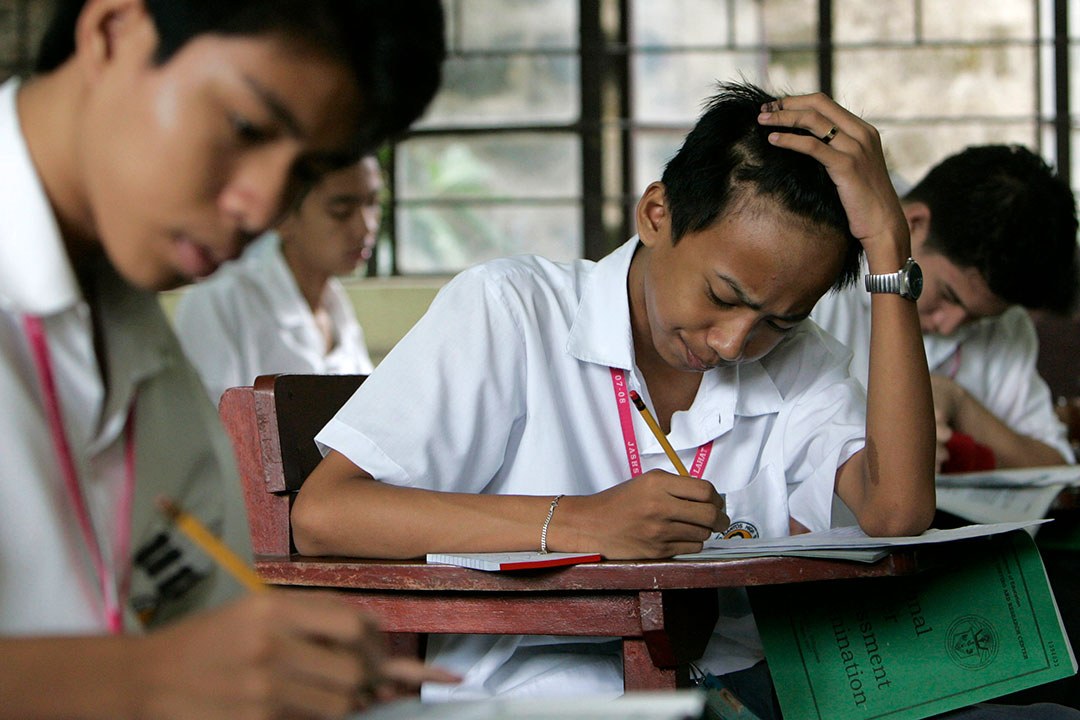
The Department of Education is earmarked P976 billion, the biggest allocation among government departments. The Department of Public Works and Highways follows with P644 billion, while the Department of Health receives P353.8 billion.
The education allocation includes P61.1 billion for universal access to quality tertiary education, P38.1 billion for government assistance and subsidies, P30.6 billion for basic education facilities and P12.1 billion for an expanded career progression system.
Infrastructure spending also remains substantial. The proposed budget includes P195 billion for the railway transport program, P176.6 billion for network development, P148.5 billion for basic infrastructure and P15.9 billion for land public transportation.
The proposed budget will now undergo congressional scrutiny and deliberations before it is enacted into law.
For the Marcos administration, the spending priorities offer a measure of where public resources are being directed during the remaining years of its term, particularly toward education, infrastructure, healthcare, social protection and economic development.
The health allocation includes P133.3 billion for health facility operations, P25.4 billion for the national health workforce support system, P24.2 billion for medical assistance to indigent and financially incapacitated patients and P19 billion for zero-balance billing in Department of Health and local government hospitals.
Social protection programs likewise account for a significant portion of spending. The Pantawid Pamilyang Pilipino Program receives P99.1 billion, while P51.6 billion is allocated for social pensions for indigent senior citizens. Another P33.3 billion is earmarked for protective services for people and families in difficult circumstances.
The proposed spending plan also reflects the government’s response to climate and disaster risks. Climate change expenditures are set at P692.7 billion, while P45.7 billion is allocated to the National Disaster Risk Reduction and Management Fund.
Agriculture remains another spending priority, with P30.4 billion for irrigation services, P29.9 billion for the National Rice Program and P16 billion for farm-to-market roads.
Defense spending includes P73.7 billion for the subsistence allowance of military and uniformed personnel and P50 billion for the revised Armed Forces of the Philippines modernization program.
The government is also allocating P8 billion for the Department of Science and Technology’s grants-in-aid program, P5 billion for free public internet access and P1.1 billion for the national broadband program. — Norman P. Aquino and Pexcel John Bacon