
A version of this article appeared in CNBC's Inside Wealth newsletter, a weekly guide to the high-net-worth investor and consumer. Sign up to receive future editions, straight to your inbox.
The likely defeat of the California billionaire tax may energize Democrats in Congress to propose federal tax hikes on high earners along with a potential federal wealth tax, according to tax experts.
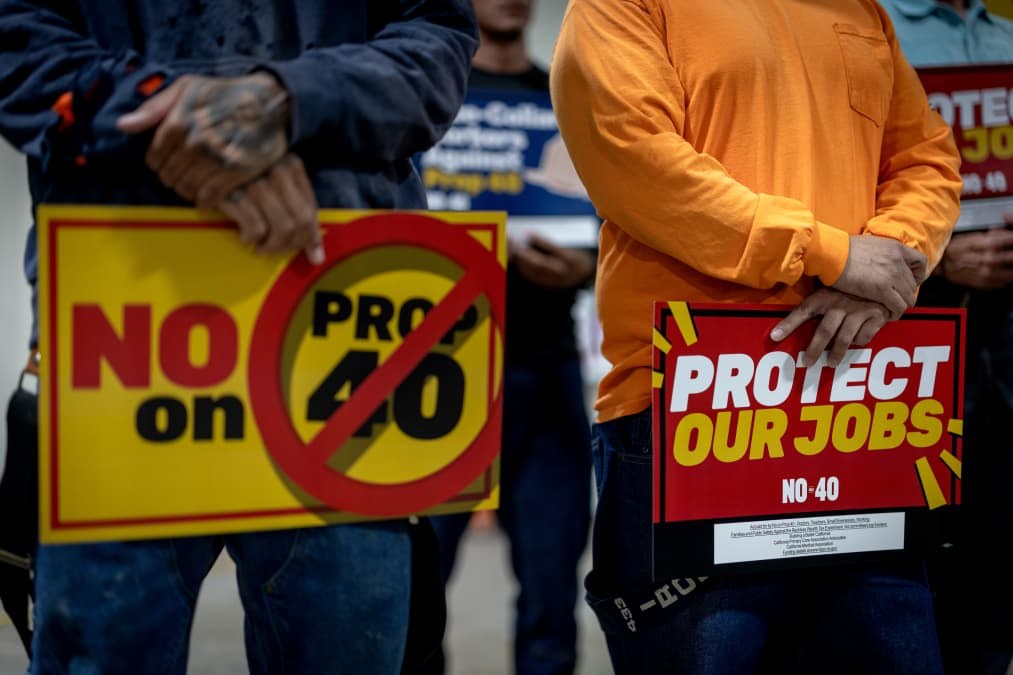
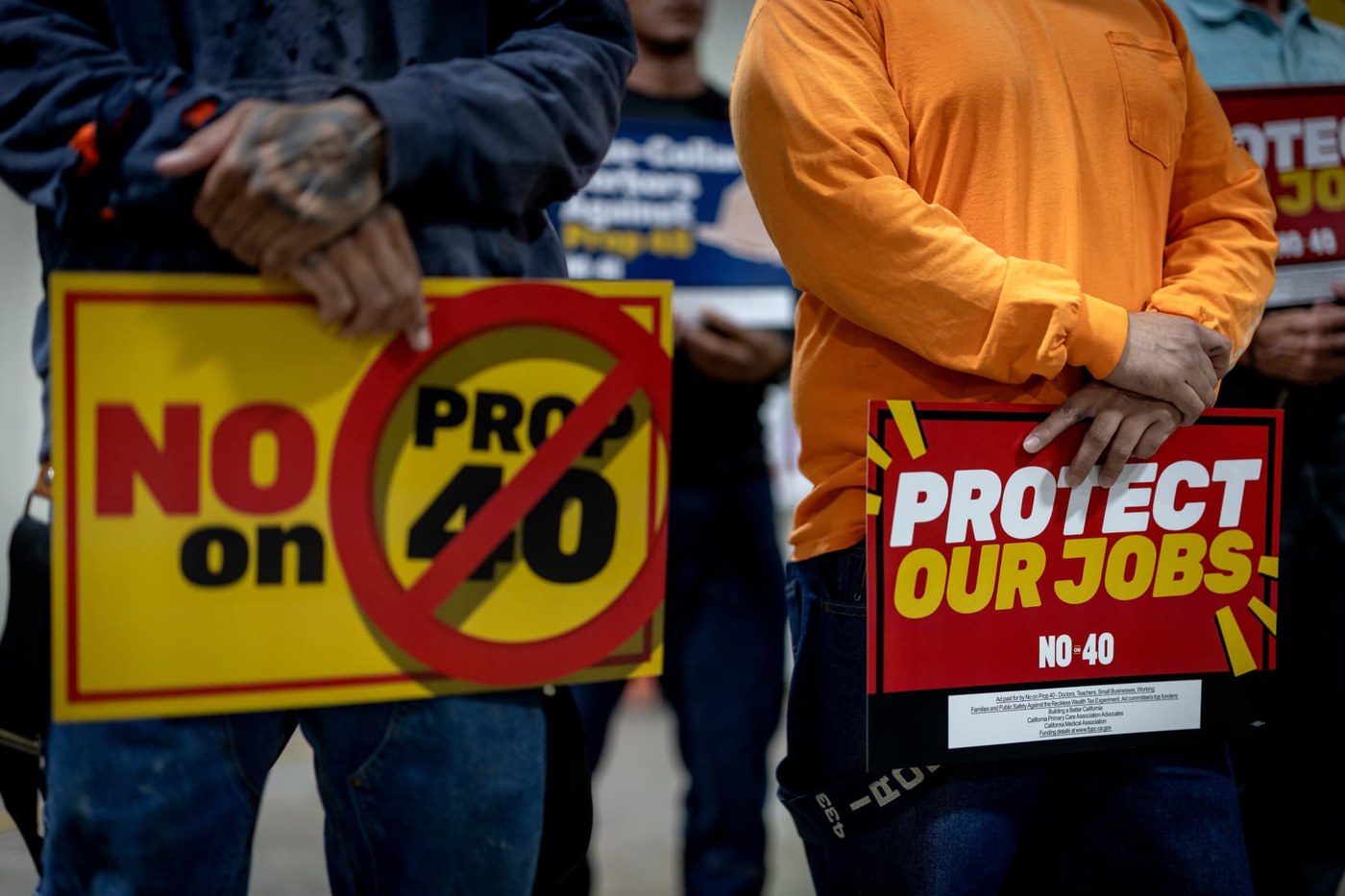
While the votes in California are still being counted, 56% of the state's voters have voted "no" on the billionaire tax while 44% voted "yes." The ballot measure requires a majority of votes for approval, so election experts say a defeat is likely. The tax, known as Proposition 40, would have imposed a one-time levy of 5% on the net worth of Californians worth over $1 billion.
Two ballot measures designed as poison pills against the billionaire tax are garnering strong support. Proposition 41 and Proposition 42, which limit revenue use and prevent any state taxation of personal assets, are both showing majority "yes" votes. If either gets more votes than the billionaire tax, the billionaire tax is defeated.
Service Employees International Union-United Healthcare Workers West, the healthcare union that sponsored the billionaire tax proposal, all but conceded defeat Tuesday night, saying they will try again in 2028 unless the legislature takes action to "make billionaires pay their fair share."
Proposals to raise income taxes on the wealthy fared better in other states. In Washington State, voters supported a new "millionaire tax," which would impose a 9.9% tax rate on household income of more than $1 million a year. In Colorado, the passage of a plan to replace the flat tax of 4.4% with a graduated income tax with a top rate of 8.4% on income over $1 million, is too close to call.
With Democrats now set to control both the House and the Senate, tax experts expect a flurry of new tax proposals aimed at raising taxes on high earners to cut taxes for lower- and middle-income taxpayers.
"It is clear Democrats will try to lower taxes for middle-income households and raise taxes on certain businesses and high-income households," said Howard Gleckman, nonresident fellow at the Tax Policy Center. "But it is much too soon to know how."
The proposals could include plans like those floated last year by Senators Chris Van Hollen, D-Md, and Cory Booker, D-N.J. Van Hollen's plan calls for a new graduated surtax on those earning more than $1 million, starting with a 5% surtax for those making between $1 to $2 million and rising to 12% for those earning more than $5 million a year. The new top rate would be 49% under the existing 37% top marginal rate.
The hikes would be offset by a tax cut on middle- and lower-income taxpayers, creating a new exemption equal to $46,000 for single filers and $92,000 for joint filers. Van Hollen has also proposed increasing the capital gains top tax rate from 23.8% to 35.8%.
Booker's plan is similar, but would increase the top rate to 43% and more than double the standard deduction to $37,500 for single filers and $75,000 for joint filers.
While taxing the wealthy has proven popular among Democrats, pairing the tax hikes with tax cuts for lower or middle-income taxpayers could prove challenging given the deficits, tax experts say.
"A key question is the debate about how much to prioritize further cuts at all, given the revenue needs for the deficit situation and the Democrats' spending priorities," said Garrett Watson, vice president of federal tax policy at the Tax Foundation. He said those priorities include reversing Trump-era tax cuts as well as expanding spending.
Plans for a federal wealth tax or tax on unrealized gains could also get more attention. Congressman Ro Khanna, D-Calif., who campaigned for the California billionaire tax and whose Silicon Valley district is home to substantial tech wealth, teamed up with Sen. Bernie Sanders, I-Vt, on what they call the "Make Billionaires Pay Their Fair Share Act."
The plan would impose a 5% tax on total net worth of those worth more than $1 billion. Yet unlike California's tax, which was a one-time levy, the Khanna-Sanders plan would be an annual tax.
Of course, President Trump would likely veto any Democratic tax plan, especially if it takes aim at the Trump tax cuts passed in 2017 and extended and expanded last year. But tax experts say any Democratic plans introduced in the next two years could influence tax policy in the 2028 election and highlight the party's priorities.
"Proposals made in 2027 will shape the direction of policy in the future," the Tax Foundation said in a report. "While their ambitions to raise taxes will be limited by President Trump's veto, these proposals will serve as messaging and discussion vehicles over the next two years on the direction of the tax code."